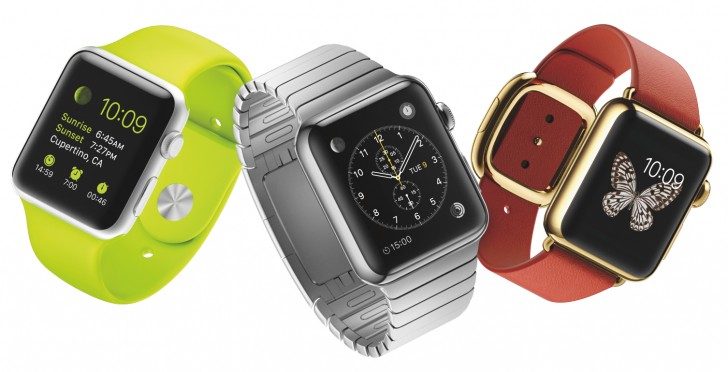
It was a day steeped in history, on the very stage where Steve Jobs originally announced the Macintosh in 1984, and the iMac in 1998, Tim Cook mentioned Steve on stage for the first time since his death two years ago. There were also glimpses and references to an Apple of the past; an image of the original mouse, a picture of the first iPhone, and of course a performance from U2.
Of that history, 2007 springs to mind. When doing the rumour roundups ahead of Tuesday's event I was struck by the similarities—and those feelings weren't wrong. With the Apple Watch it's clear that as with the iPhone and iPad, Apple had no interest in having the surprise, the wonder and awe spoiled by the unsightly reveal of an FCC filing or worse the discovery of a button out of the China supply chain. So here we have an announcement some 4-5 months ahead of the actual release of the Apple Watch, with all the same kind of worries and mysteries that surrounded the iPhone launch in 2007.
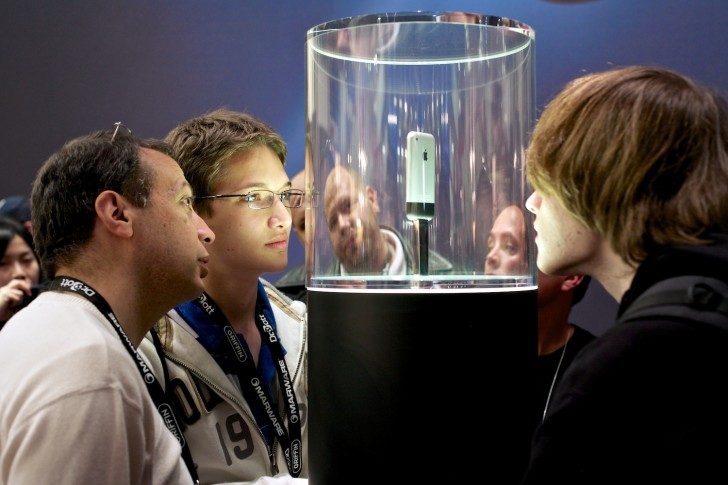
Sometimes it's hard to believe that it was just seven and half years ago that Steve Jobs took to the stage in San Francisco and wowed the world with the first ever iPhone. Seven and a half years since the beautiful aluminium iPhone could only be seen slowly turning inside a clear plastic cylinder. Seven and a half years since Apple started a press release that included the line "iPhone a revolutionary new mobile phone that allows users to make calls by simply pointing at a name or number."
The iPhone of 2007 was a lightyear ahead of the majority of the devices on the market, but it wasn't the first smartphone and it certainly wasn't the first device that brought the idea of interacting directly with the display as a concept. But the iPhone created a desktop class OS on a mobile device, it did away with the stylus and for the first time showed us the power of multi-touch on a portable computer.
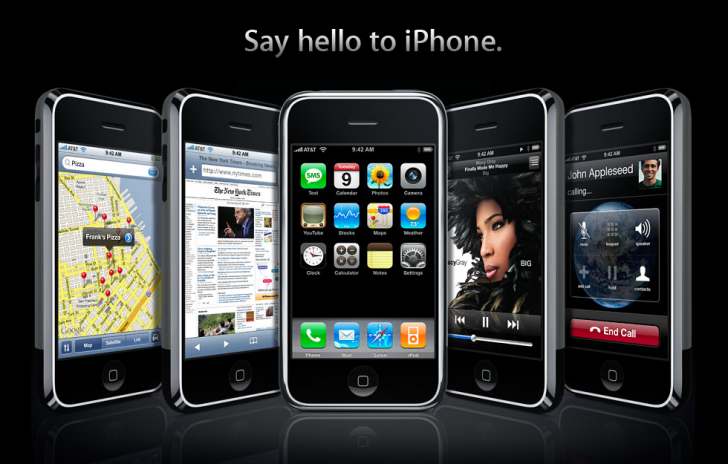
Whilst it may have been revolutionary, the iPhone of 2007 was rudimentary. The original install of iOS (née iPhone OS) had no apps, never mind an App Store. The original iPhone was slow, was thick, was heavy, could only connect to an EDGE network at best, and had a camera that was laughable even for its time. The iPhone of 2007 couldn't copy and paste, couldn't record video, couldn't send the photos it had taken over SMS, and much more. But this is only rudimentary when seen through the prism of history.
In 2021, seven years from now we will very likely look back on September 9 in the same way we did January 9, 2007. In the years that followed the launch of the iPhone the features rolled in thick and fast, first came faster phones, more advanced mobile networks, and of course the App Store. This has led in a relatively short space of time to an App Store of some 1.3 million Apps available in 155 countries, the fastest smartphones on the market—some may even say market leading devices.
Today we know little about Apple Watch. Concerns about battery life reverberate around the edges of the internet, questions over the screen resolution puzzle developers, and the suitability of notifications on the wrist raise the eye brow of even the most ardent Apple supporter, "Why stare at a tiny photo on my Watch when I could just pull out my (newly enlarged) iPhone?" you hear them say.
But a unique place for Watch decoupled from the iPhone, a vast and diverse app ecosystem, and a battery life in the range of weeks is more than achievable in seven years and would be just some of the parts of a formula that would once again forge a category for Apple to dominate.
Again, not first to market but the clearest in purpose, vision, and conviction to make it work. If any company can combine that arrow like focus with expertise in hardware, software, and services then it is Apple.